
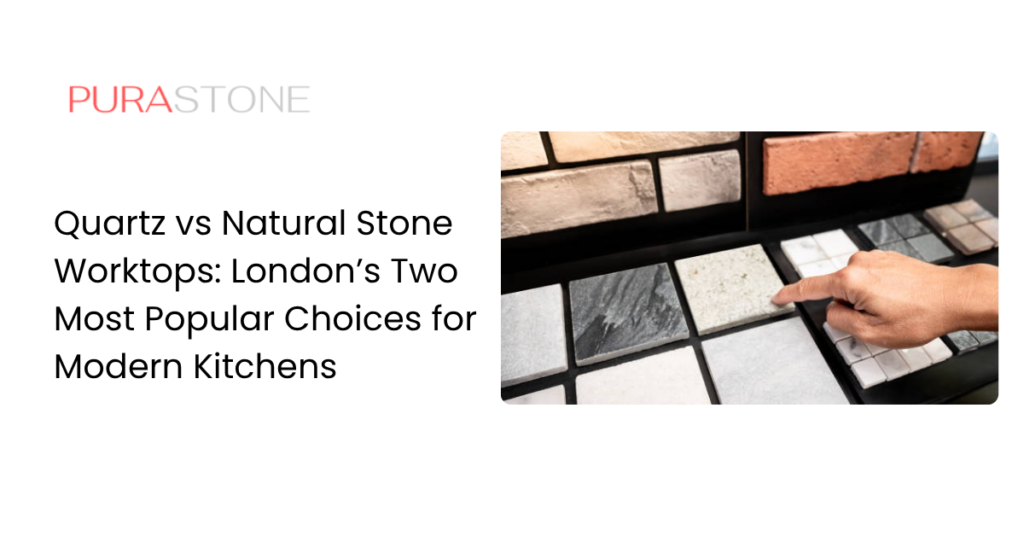
Choosing a kitchen worktop is not just about picking a colour that matches the cabinets. Quartz and natural stone are two popular choices for modern kitchens, but they offer different advantages. Knowing the differences between them can help you make the decision much easier, whether you are exploring Quartz worktops Rochester, considering Quartz worktops London, or simply comparing different worktop materials for your kitchen!
1) Quartz and Natural Stone: Materials and Appearance
Quartz worktops are engineered surfaces made from natural quartz combined with resins and pigments. Because they are manufactured, they offer consistent colours and patterns, making them suitable for kitchens where a uniform, contemporary appearance is important.
Natural stone worktops, such as granite and marble, are cut from naturally occurring stone. Every slab has its own veining, patterns, and colour variations. This natural character gives each worktop a distinctive appearance that cannot be perfectly replicated.
2) Durability for Everyday Use
Quartz worktops are hard and durable, making them well-suited to busy kitchens. They can handle everyday preparation, cooking, and general use when properly cared for. However, quartz can still be damaged by excessive heat or heavy impact.
Natural stone worktops can also provide excellent durability, particularly granite. However, performance varies by stone. Some natural stones are more resistant to scratching and staining than others, so choosing the right material for your lifestyle matters.
3) Maintenance and Cleaning
Quartz worktops are generally straightforward to maintain because their non-porous surface does not readily absorb liquids. Routine cleaning with suitable products is usually enough to keep the surface looking fresh, making quartz convenient for households that prefer low-maintenance materials.
Natural stone worktops may require more attention depending on the stone selected. Some varieties can be porous and may need periodic sealing to help protect against staining and moisture. Spills should also be cleaned promptly, particularly on more absorbent surfaces.
4) Heat and Stain Resistance
Quartz worktops offer good resistance to everyday stains, but they are not completely heatproof. Placing very hot cookware directly on the surface can potentially damage the resin component. Using trivets or heat-resistant mats is therefore a sensible precaution.
Natural stone worktops generally tolerate heat well, particularly granite, although sudden temperature changes can still cause problems. Their resistance to stains depends on the stone and its sealing. Marble, for example, can be more vulnerable to staining and acid-related marks.
5) Design Consistency and Uniqueness
Quartz worktops Rochester provide greater consistency because they are manufactured under controlled conditions. Multiple pieces can usually offer a more predictable colour and pattern, which can be useful when you want cabinets, islands, and worktop sections to have a coordinated appearance.
Natural stone worktops offer a more individual look because every slab develops naturally. Veining, colour variations, and mineral patterns can differ considerably, even between slabs of the same stone. This makes natural stone particularly appealing if you want your kitchen worktop to have a one-of-a-kind appearance.
In A Nutshell
Quartz and natural stone can both create an impressive kitchen, but they suit different priorities. Quartz offers consistency, convenient maintenance, and contemporary styling, while natural stone brings individuality and an unmistakable organic character. Before choosing, compare the material, finish, durability, care requirements, and overall design carefully to find a worktop that genuinely fits your space.
Your perfect stone could be just a click away, so take a look at what Pura Stone has to offer!
