
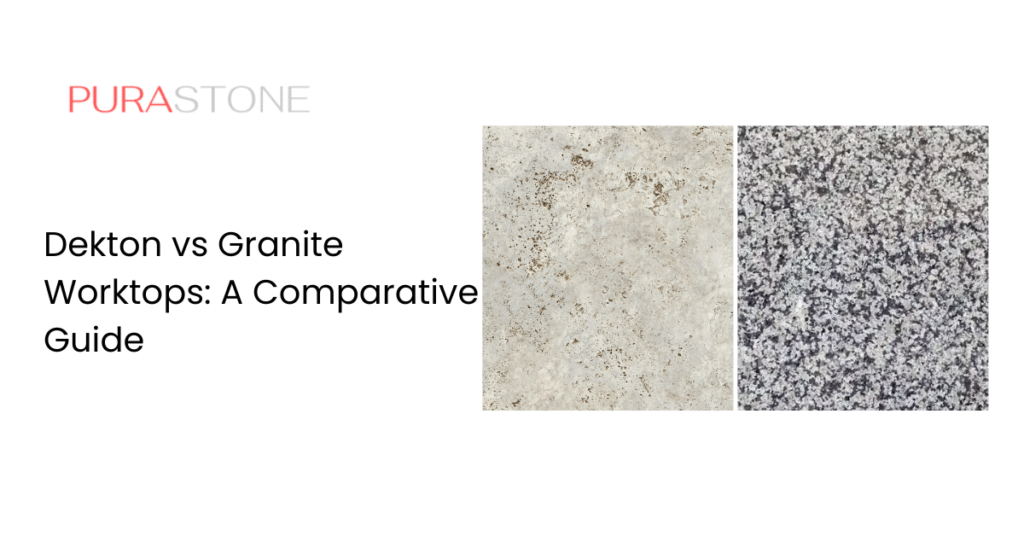
Granite and Dekton are two premium products that designers and homeowners alike consider over each other when deciding on the perfect worktop for the kitchen or bathroom. Both products contain extended value, beauty and toughness; however, the makeup, functionality and maintenance requirements are not the same. Knowing the difference between granite and Dekton countertops facilitates an informed decision that meets specific needs and desires.
Manufacturing and Composition
Granite is a natural stone cut to slab form after it has been taken from the ground. Granite is an individual with unique veining and colouring that is built up over millions of years. It is then sealed and polished to lock the surface down and to bring it up.
Dekton, however, is an engineered slab created through the merging of quartz, glass and ceramic through extreme heat and pressure. Through sinterised particle technology, the end result is a highly dense and non-porous material. Unlike with granite, Dekton is created within an engineering environment, with the colour and pattern always the same.
Performance and Endurance
Both countertops are strong, but they shine differently. Granite is very durable to heat, scratches and overall usage, so it is very popular for active kitchens. Yet, being natural stone, it is prone to staining if not adequately sealed and cared for.
Dekton is designed to have the latest technology to give ultimate heat, stain, and scratch resistance. Its surface is also non-porous, hence impervious to liquids and chemicals, eliminating the necessity for sealants. Dekton also has very good UV resistance, enabling it to be perfect for both exterior and interior applications without losing colour.
Aesthetic Choices
Granite displays classic natural elegance, with inherent patterns and colours unique to each slab. Design aficionados, who desire individuality, mostly go for the natural variations found in granite. Its beauty is elegant for both modern and classic homes.
Dekton, however, has lots of colours, finishes and thickness to choose from, with options that replicate natural stone, concrete or metal. Its consistency favours clean, contemporary designs and jointless laying. Dekton is perfect for those with the desire for an overall cohesive and simple look among several surfaces.
Maintenance and Care
Granite worktops must be sealed periodically to avoid bacterial accumulation and staining. It is advisable to clean the granite daily with water and mild soap, and never with acid or harsh cleaners, to help maintain the polish.
Dekton worktops require very little maintenance. The hard-wearing, stain-resistant surface is simple to clean with water and a gentle cloth. With no need to seal, Dekton is also a convenient solution for those concerned with convenience and hygiene.
Conclusion
Both Dekton and granite worktops offer major benefits for durability, design flexibility and maintenance. The last decision is an individual choice to go for the natural beauty of the granite or the technical accuracy of the Dekton. To find a vast range of top-end worktops and professional advice, go to Pura Stone.
